Lithium-ion battery packs have established themselves as a powerful and cost-effective solution in construction site operations. They offer high energy density, long runtimes, and a sustainable alternative to disposable batteries. At the same time, lithium technology often raises uncertainties regarding transport regulations. The following provides a practical and legally compliant overview of the applicable rules.
According to the European Agreement concerning the International Carriage of Dangerous Goods by Road (ADR), lithium-ion batteries are classified as Class 9 dangerous goods. Depending on the transport condition, they are categorized as:
- UN 3480 – Lithium-ion batteries
- UN 3481 – Lithium-ion batteries contained in equipment
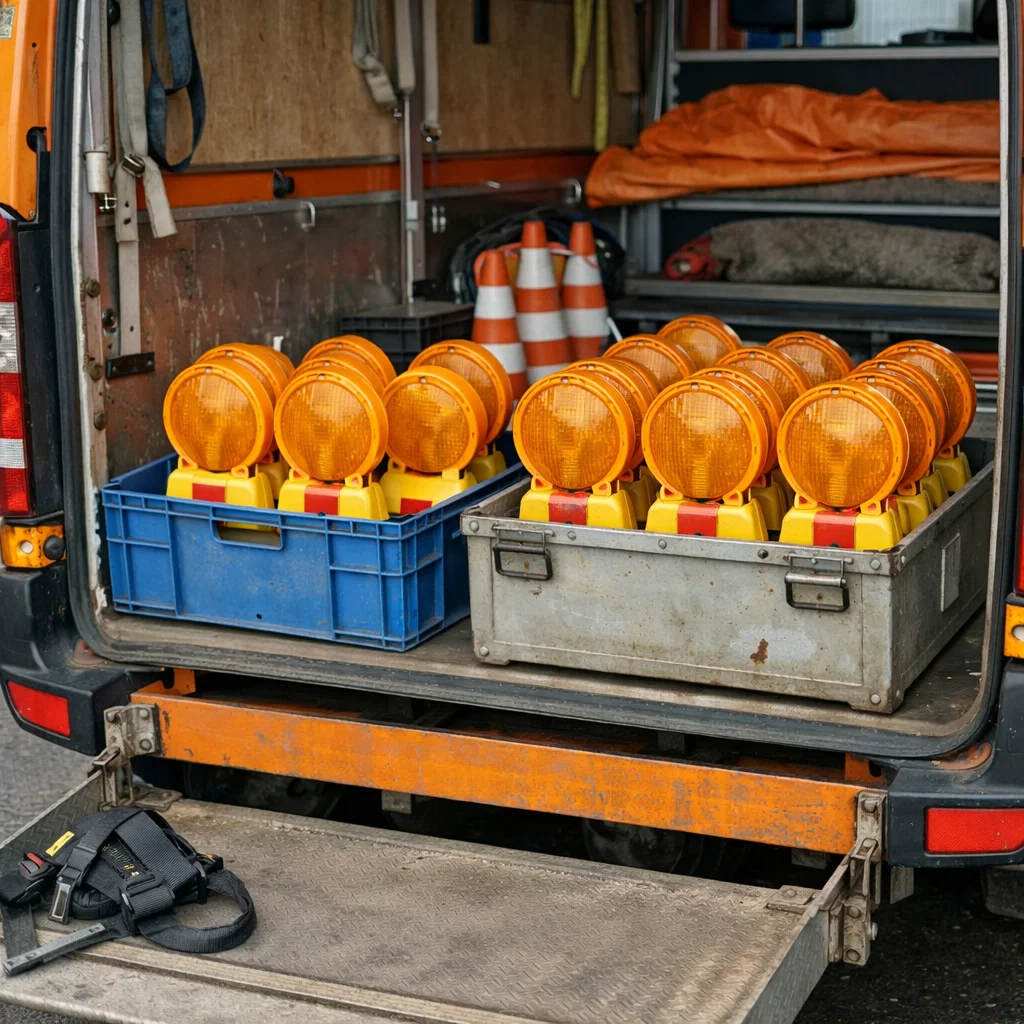
When battery packs are transported installed in warning lights, which is the typical condition in normal construction site operations, they are classified as UN 3481 (batteries contained in equipment).
A key aspect is the so-called 1,000 point rule according to ADR 1.1.3.6. Lithium-ion batteries are generally assigned to transport category 2 and are rated at 3 points per kilogram. A maximum of 1,000 points may be transported per vehicle before additional, more extensive ADR requirements apply. This corresponds to a maximum total mass of up to 333 kg of lithium-ion batteries per transport unit. In typical use cases for construction depots, road maintenance authorities, or construction companies, this limit is rarely approached.
In addition, the exemption under ADR 1.1.3.1 c, often referred to as the “craftsmen exemption”, may apply in operational use. This exemption applies when warning lights with permanently installed lithium-ion battery packs are transported by traffic safety companies in connection with their immediate operational activities, such as setting up and securing construction sites. The condition is that the transport serves the execution of the company’s own work and does not constitute a separate commercial transport or resale of the equipment.
The transported quantity must be limited to what is necessary for the specific operation. Systematic storage or distribution transports as well as deliveries to third parties are not covered by this exemption.
If these conditions are met, key obligations such as orange vehicle marking and the requirement for an ADR driver certificate do not apply. However, general duties of care remain unchanged, in particular proper load securing and the transport of only undamaged and operationally safe batteries or devices.
If battery packs are transported separately (UN 3480), additional organizational requirements apply. These include protection against short circuits, for example through insulated terminals or protective covers, stable packaging, and proper load securing. When applying the 1,000 point rule, training in accordance with ADR Chapter 1.3 is also required. This training applies to personnel involved in packing, loading, or transport. It is not an ADR driver license, but a documented dangerous goods instruction, which in practice can be completed online within one to two hours.
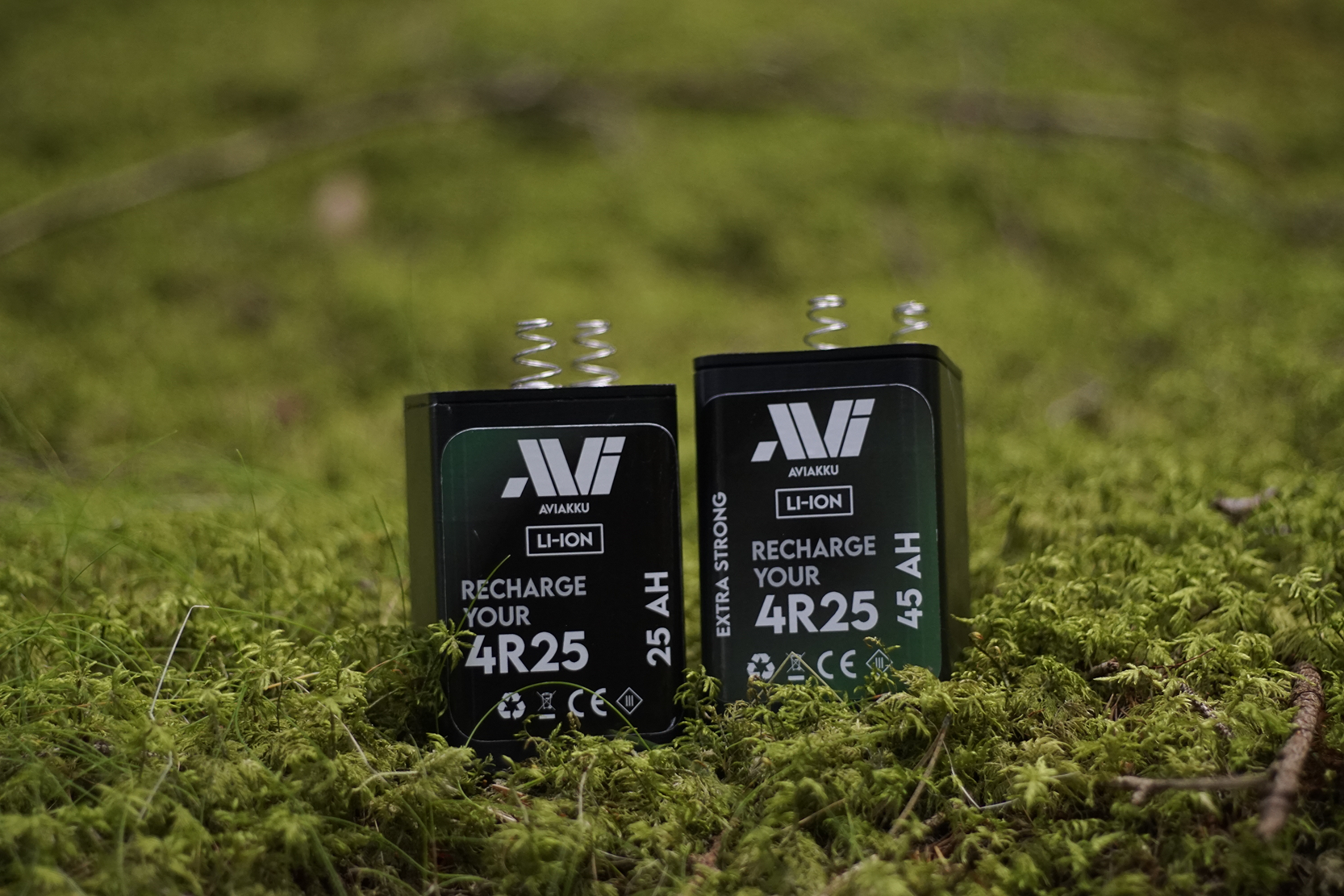
Our 4R25 lithium-ion battery packs meet all technical requirements for compliant transport. They are tested and certified in accordance with UN 38.3, which is a mandatory prerequisite for placing lithium batteries on the market and for transport. In addition, the battery packs are supplied with short circuit protected terminal covers, ensuring that short circuit protection requirements are already met by design.
In summary, transport in warning lights (UN 3481) is generally unproblematic in normal construction site operations when properly secured and is typically covered by exemptions. Transport of loose batteries (UN 3480) requires short circuit protection, stable packaging, load securing, and compliance with the 1,000 point limit, as well as documented training according to ADR 1.3.
Under typical operational conditions, companies remain well within the permitted limits. With UN 38.3 certified battery packs, integrated short circuit protection, and proper securing, lithium technology can be safely and legally integrated into existing workflows.